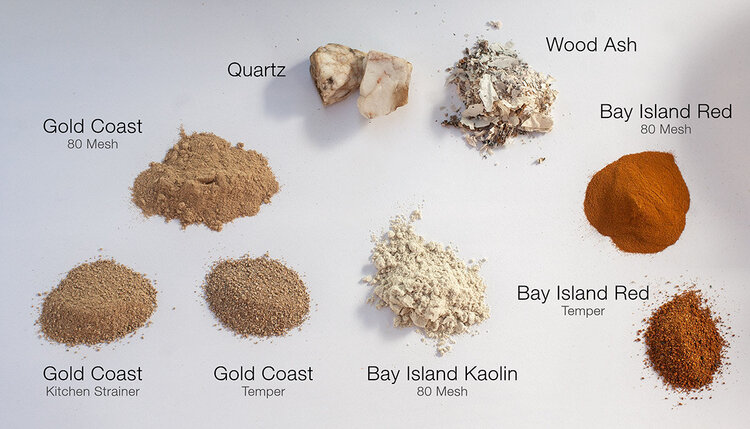
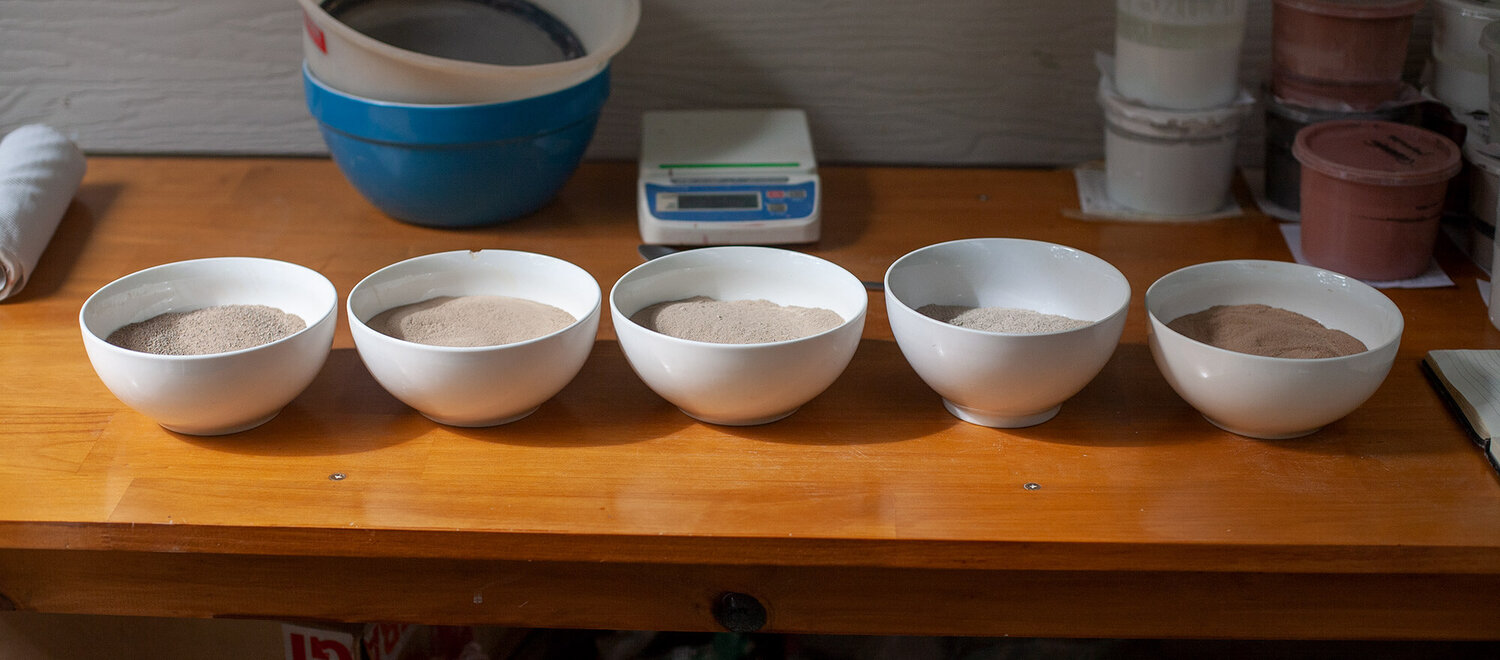
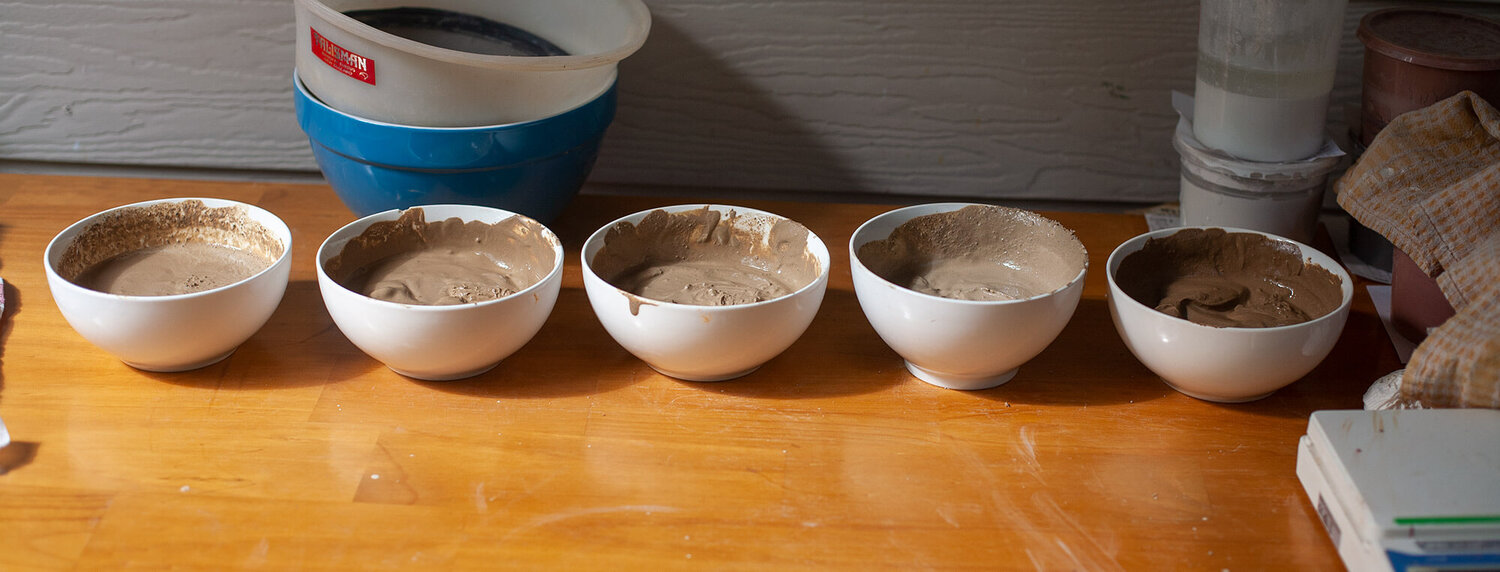
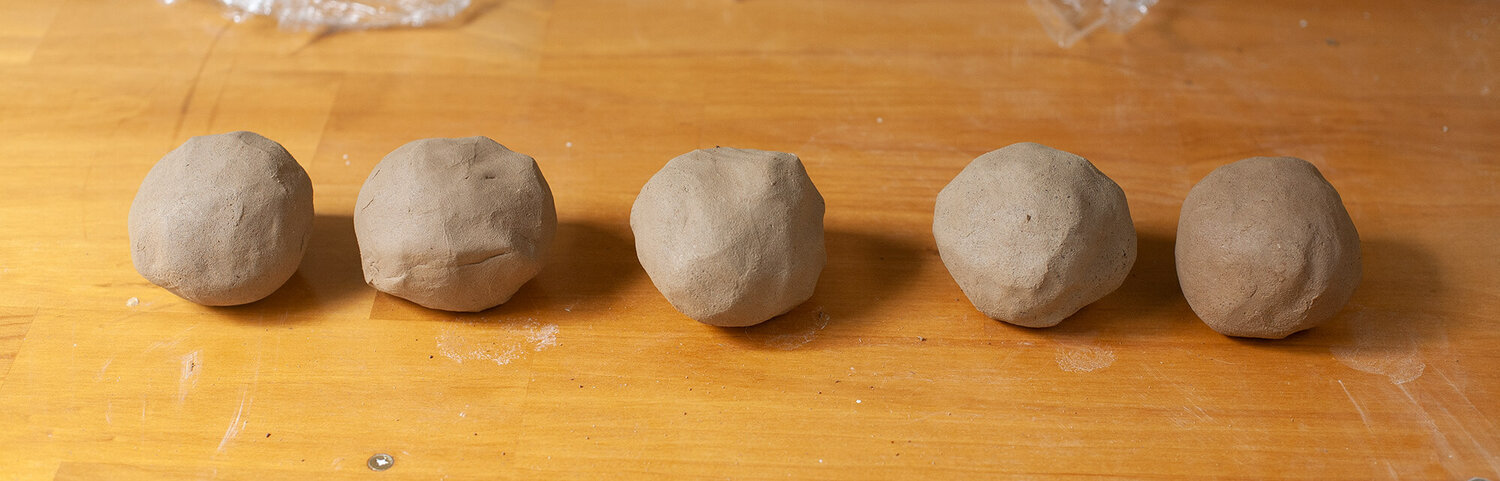
There is a certain satisfaction in sourcing wild materials and using them to form things of beauty. It begins with the hunt, usually a place I have driven past and made a mental note of for its promise. Returning when time allows to take some samples.
My Gold Coast clay find happened while I was chaperoning my youngest daughter for Schoolies Week. I dug the Bay Island red clay from under my house, and I found the Bay Island kaolin a short distance away.
Not all clays are equal. Ideally, you are looking for plasticity, which is influenced by the size of the clay particles, among other properties. When out in the field, a simple test is to add a few drops of water to a sample and roll it between your fingertips. If it feels a little sticky and does not crack when bent, you may have found a suitable source.
When I get the clay home I slate it down which essentially involves adding water and letting the clay dissolve. I then sift it through a kitchen strainer. Sifting again through an 80-mesh screen removes most of the grit. After drying the clay can be wedged and, if suitably plastic, thrown on the wheel.